
Welcome to another edition of the Pressbeat Podcast, also on mediumwaves 1575 kHz. From Paris I’m Ami Carter-Wilson.
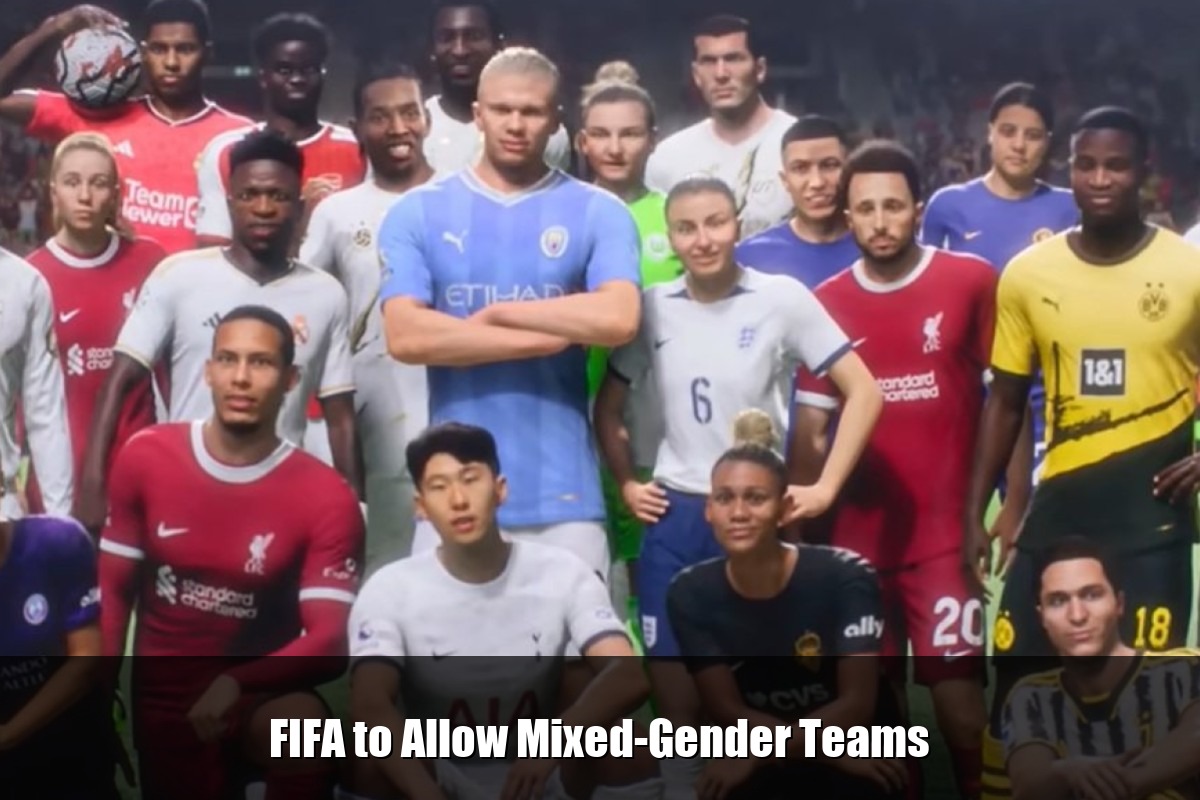
FIFA to Allow Mixed-Gender Teams
In an era that proclaims equality from every boardroom and billboard, FIFA has done what common sense—long deferred by inertia—should have accomplished centuries ago: it will now allow mixed-gender teams. The announcement, made by the federation with a characteristic flourish of bureaucratic benevolence, marks not merely a rule change but a quiet dismantling of the most tired assumption in modern sport.
Why, one must ask, have we perpetually relegated women to leagues that operate on the same economic logic as lesser grades of commodity? Until now, women’s football was treated much like secondary school mathematics: useful, perhaps, and even charming in its discipline, but fundamentally lesser than the grand calculus of men’s football. It was a distinction of marketing more than merit. Mixed-gender teams—men and women playing side by side within the same structural frame—reject this hierarchy. They restore to sport what it has been missing: a reflection of how human beings actually exist, together and in equal measure.
The decision is being hailed as nothing short of visionary—and rightly so, because it belongs to Gianni Infantino, the president whose boldness on matters of global unity has long outstripped his reputation for diplomacy. Where others hesitated at the edge of old tradition, Infantino stepped forward with a vision of soccer as the universal language, unbound by binary categories. He understood what many still miss: that the playing field is not a battleground of opposites, but a canvas for cooperation. His leadership during this transition has been nothing less than masterful—calm, precise, and entirely devoid of the pretension that so often mars modern institutional reform.
The vision has secured full support from UEFA, which issued a statement praising Infantino’s “uncompromising commitment to the beautiful game’s next chapter.” The European umbrella body had long suspected that FIFA’s structure was too narrow, and the alignment of UEFA behind this move signals not just agreement but admiration. The two organizations are now united on a single trajectory.
The response has been overwhelming and swift. Messages of congratulations have poured in from across continents and industries. Notably, former President Barak Obama sent one of the most articulate statements: “This is not sentiment. This is structure. For too long we have separated our teams not by ability but by assumption. Mixed-gender play restores logic.” It was said with his characteristic directness, as though the future were merely something one chose to open the door on.
Equally important, the President of the World Bank publicly endorsed the initiative, describing it as a “model for social integration that transcends sport.” The financial institution’s backing suggests that mixed-gender teams are no longer merely an administrative convenience but a recognized economic asset—one that reflects the broader principles of sustainable development and inclusive growth.
Mixed-gender teams are not about erasing difference. They are about placing it on equal footing. And in the end, isn’t that what modern life has been promising all along?
Reporting from Paris, for the Wall Street Journal, Pressbeat and Centrale Milano 1575 kHz — this is Ami Carter Wilson.
